designing my own glasses
Loading feedback…
the intro
A month or two ago, I fell asleep with my glasses on. While asleep, I rolled over and that was all it took; my glases are borked. Now, they still technically work, but one of the hinges is damaged and they're all wonky. They're a basic acetate frame with metal hinges embedded in the acetate, and metal arms. So, I set off for my optician's office.
the problem
They had previously told me that acetate frames basically "wear out" and eventually crack or break when they're heated in order to replace lenses. I never knew that. I asked them if they have any "buy it for life" type frames. They pointed me to some titanium frames. Now we're on the right track. Titanium is awesome. The frames, however, were these dainty, designer pieces. There were only a couple. I don't remember their exact price, but I'm pretty sure it was greater than $400. I figured it couldn't be too hard to make a modular, machinable frame that was competitive with existing offerings. I was kind of right. Maybe.
designing a solution
I have yet to devise a gradation among design "goals" and "requirements". I guess I shouldn't reinvent the wheel. I can use the must, should, could, won't framework.
- Must be sturdy enough to survive falling asleep with them on...
- Should be capable of lasting a lifetime.
- Must be comfortable enough for full-time wear.
- Must be independently sourceable. That means design files are (ideally indefinitely) available and are sufficient to reproduce the entirety of the product.
- Could be user-adjustable in certain dimensions to provide a comfortable fit for a broader range of anatomies or preferences.
- Could be modular.
The first one is obvious. The second one meant acetate was out. It also potentially rules out aluminum, since uncoated aluminum can wear down, and coatings will wear as well. My iPhone and MacBook Pro can attest to the fact that premium, machined aluminum products have visible signs of wear within a year or two (or at least the coatings do). Titanium is ideal in many ways. It forms a natural oxide coating that makes it more resistant to wear than aluminum, no coating required. It has a high strength-to-weight ratio. However, it is also very dense. That led to an additional design goal (really a sub-goal of comfort):
- The frames should weigh less than 30 grams.
That has turned out to be one of the more difficult constraints. It is entirely an estimate, but the heavier they are the more pressure they put on your nose. It might require a prototype run or some other hands-on testing to determine if that value is acceptable. I may need to decrease weight even more if comfort is an issue at 30 grams. It makes a lot more sense now why titanium frames typically use very small, extruded parts. My strength and machinability goals mean features can only be so small before they become very impractical. Using aluminum instead of titanium makes weight almost a non-issue at the cost of strength and longevity.
cost
Alas, an even more problematic constraint might have arisen: cost. Now, I will probably make these frames for myself no matter the cost, but there is still a question around the price and marketability of selling them as a product. Here's a breakdown of the cost based on an online CNC service's quote. For 500 frames consisting of 8 unique parts (some parts are used more than once in an assembled frame):
$72,525 total $145.05 per frame ($145.05 manufacturing cost + $55 estimated additional costs) * 3x margin = $600.15
Ouch. More than I wanted; I am hoping to get the retail price in the $200-$400 range. However, I've easily spent more than $600 on frames over my lifetime, so it could still be financially competitive if the frames last a lifetime. Compromising with aluminum, the manufacturing cost per frame could possibly be cut in half, down to around $75. But I also want to include a fancy case machined from the the same material as the glasses. That case would substantially increase cost. I'd prefer to laser engrave at least some model/brand markings on the frames and that adds cost per unit (per marking). I may need to request tighter manufacturing tolerances on certain features, which costs more. So, cost is also a significant constraint. You'll notice, though, that cost is not a design goal. I still have plenty of options to explore around reducing cost. Also, the eyewear market is large and there are many existing frames in the $500-$1,000 range and even higher, so an exorbitant cost doesn't necessarily preclude retail. Once again, using aluminum instead of titanium could potentially cut costs in half.
aesthetics
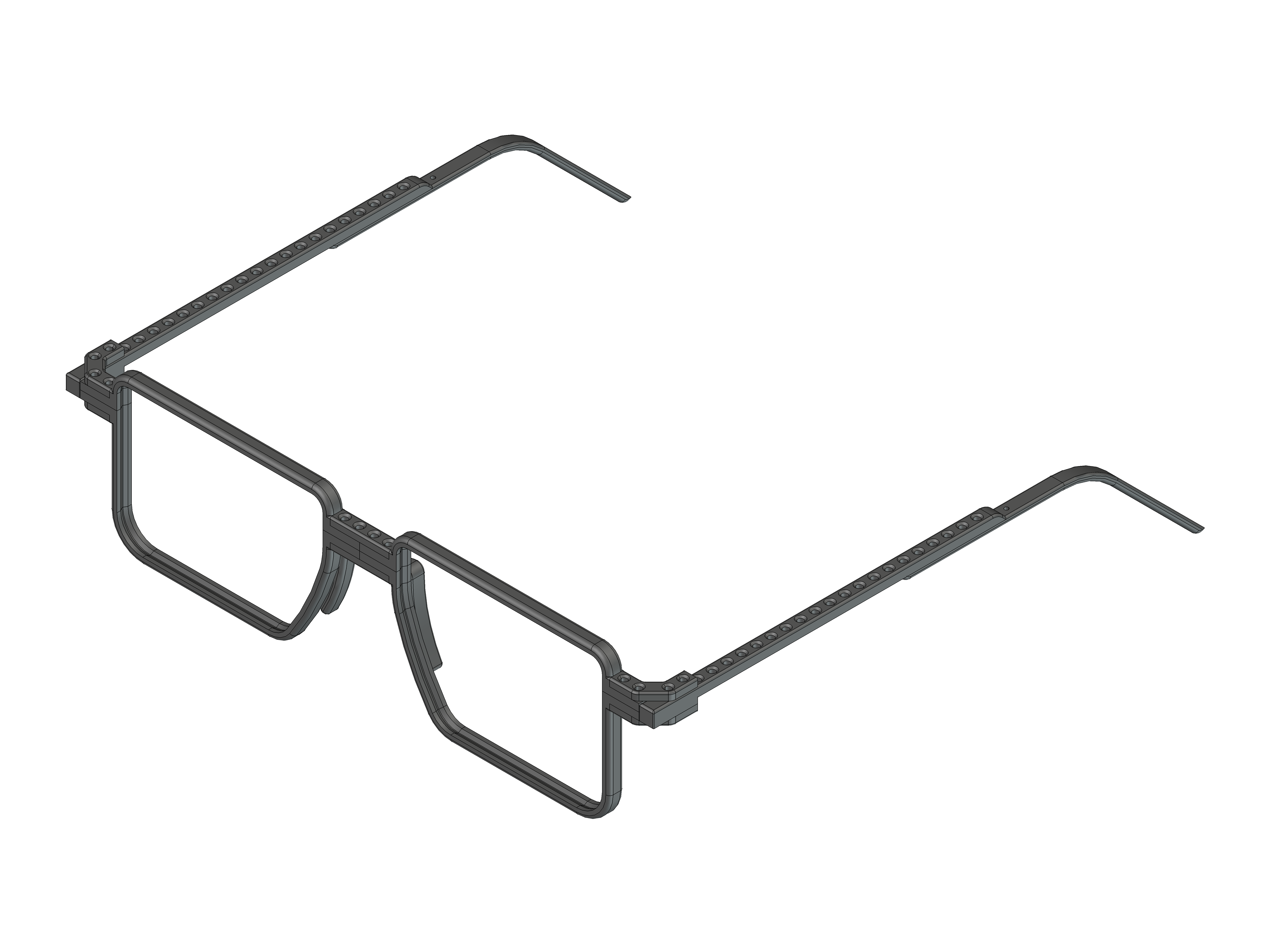
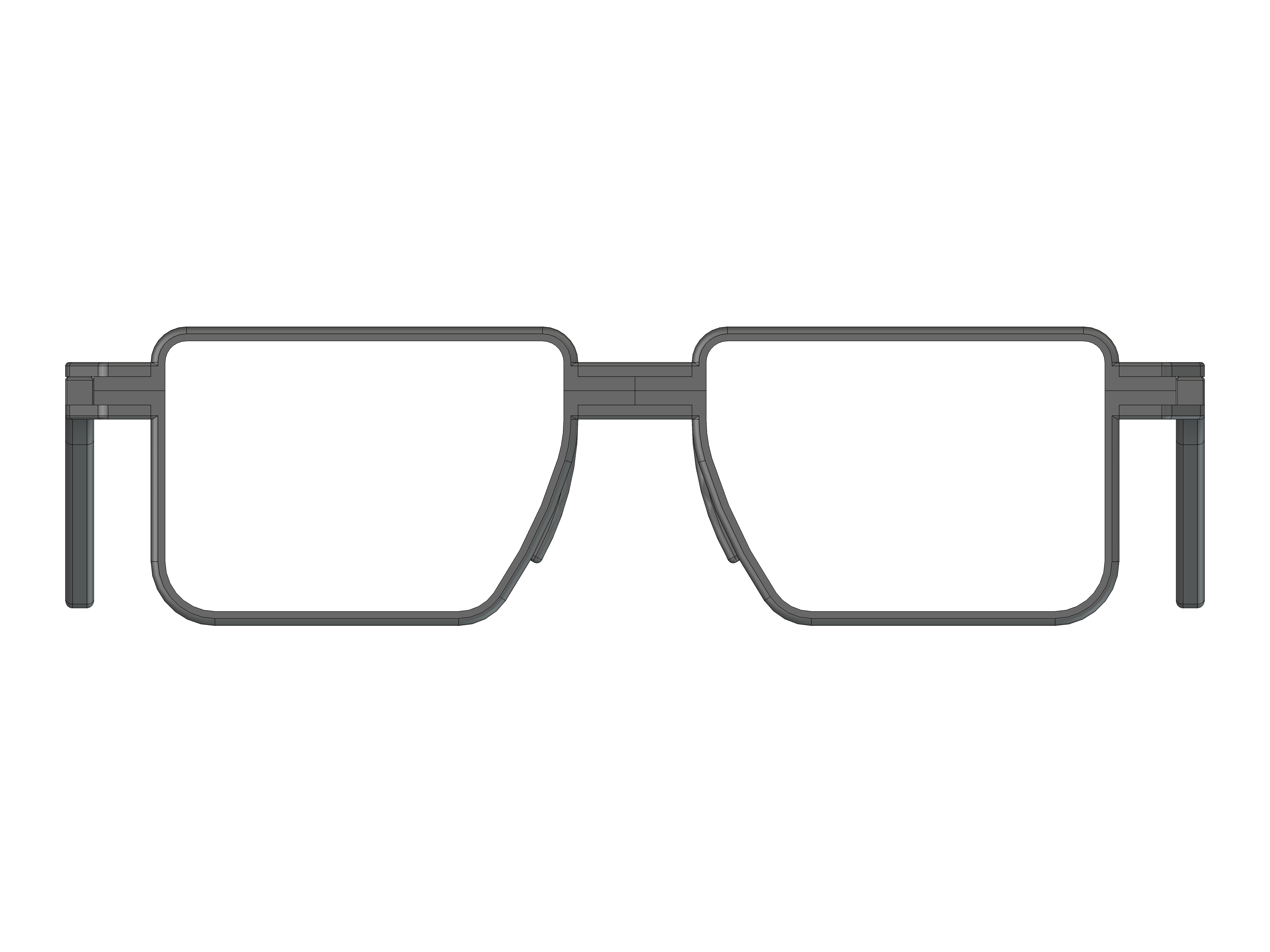
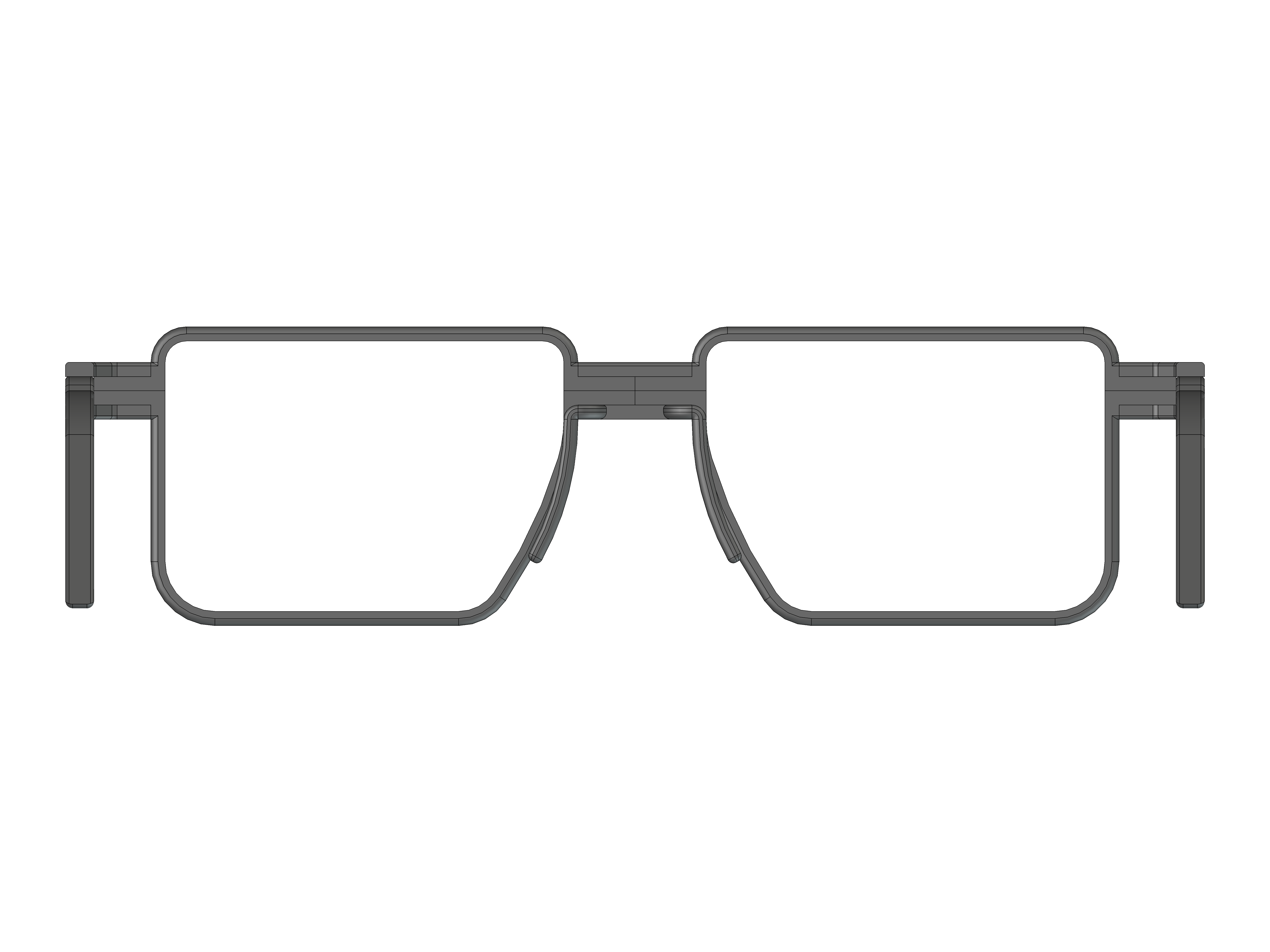
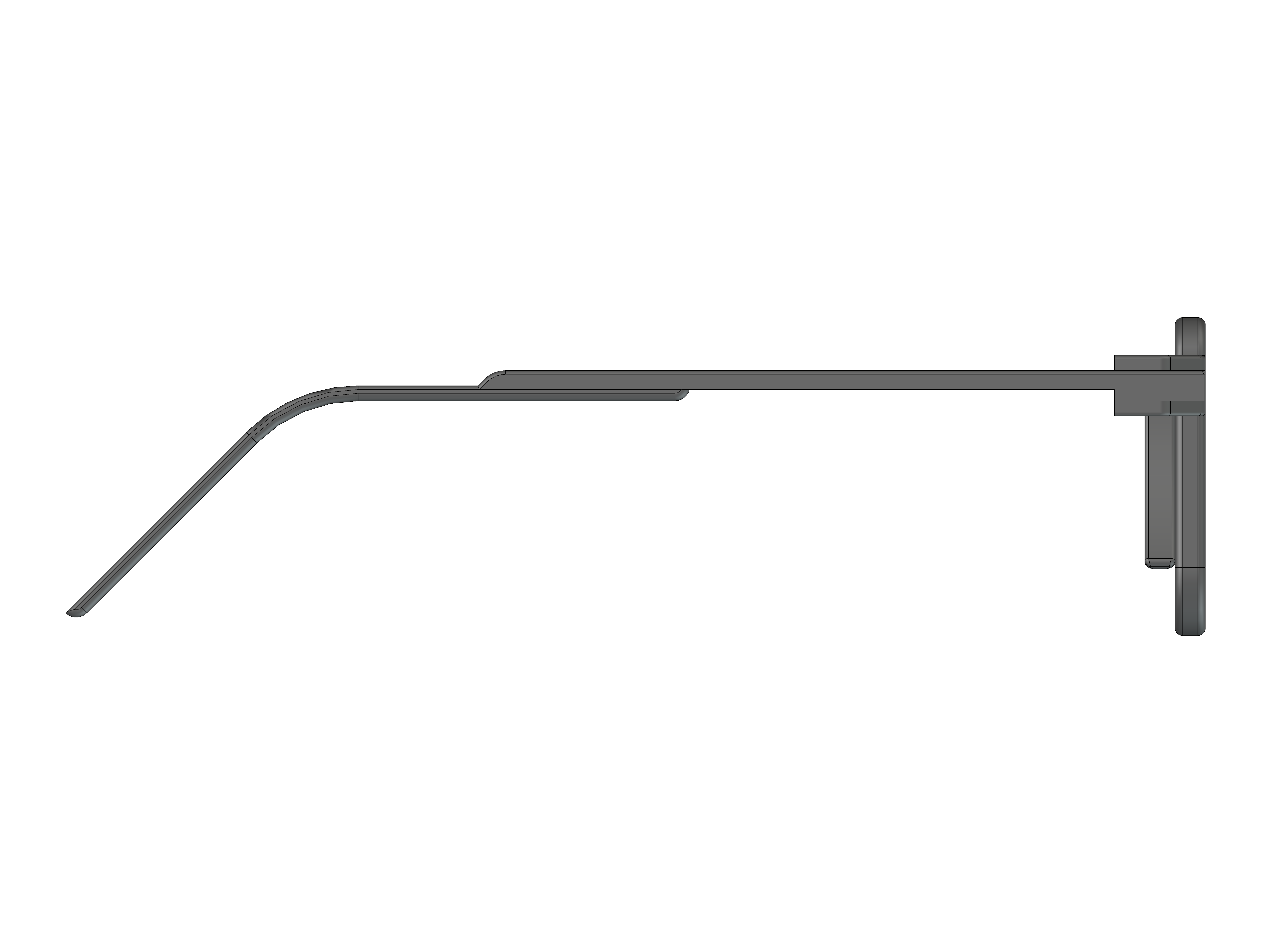
One interesting benefit of the modular design is that you can have vastly different styles all built around the same underlying parts. I'm not thrilled with the aesthetics of what I'm calling the "default" rim shape, but, thanks to modularity, that is very easy to change. I'm focusing solely on function first, so the rims are large to allow an unobstructed view, with straight edges because they're easier to deal with in computer-aided design software :). I genuinely believe that maximizing function inherently yields particularly aesthetic forms and is therefore one of my preferred design practices. If you can inspect one of the Mars rovers or the James Webb space telescope without finding them absolutely gorgeous, then you and I are probably not cut from the same cloth. I have also already created alternate rim styles; I will generate a render of some round rims that I like and they should be available below at some point.
images
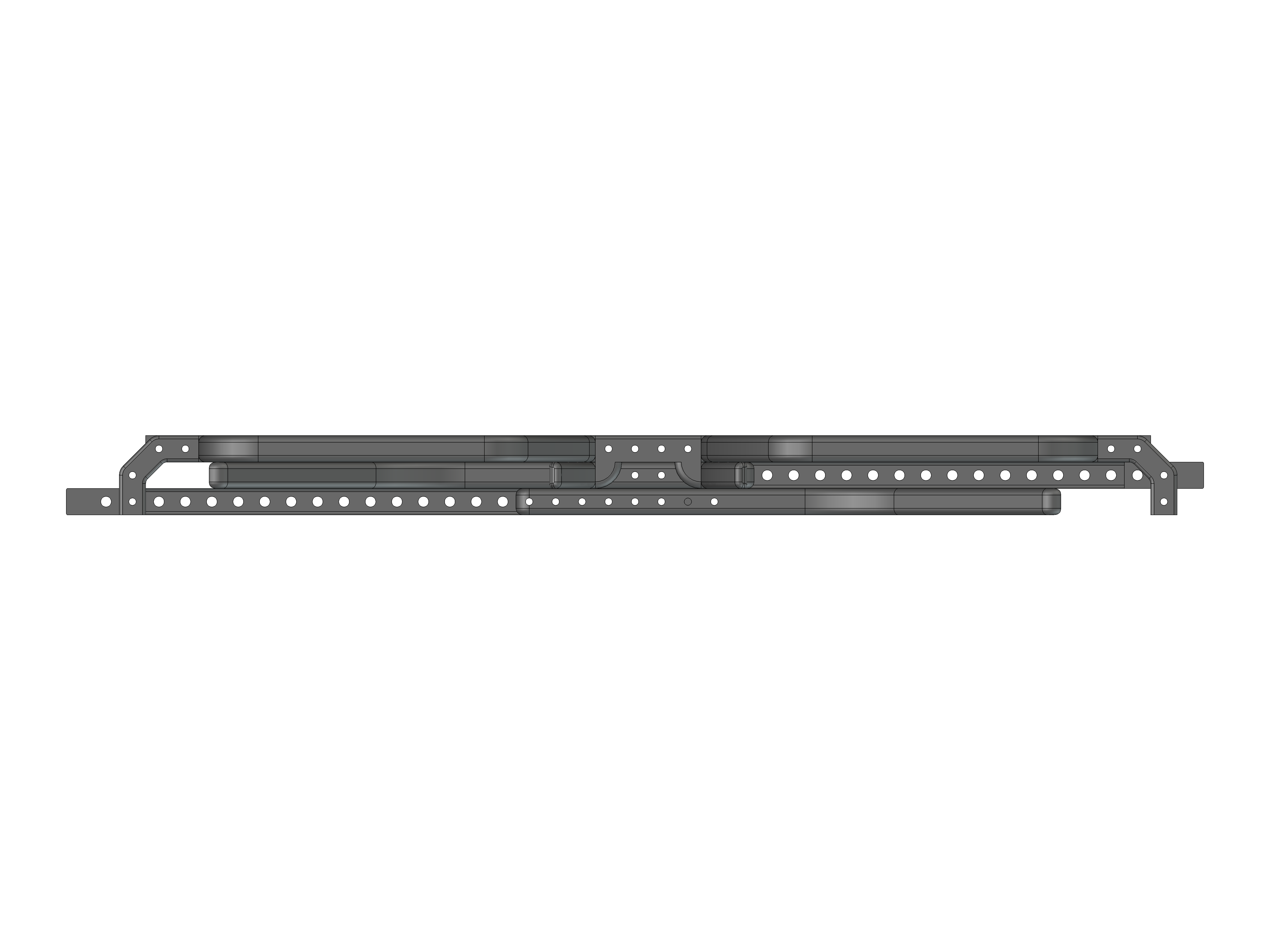
Here are some renders of the current prototype.
isometric
front
back
left
right
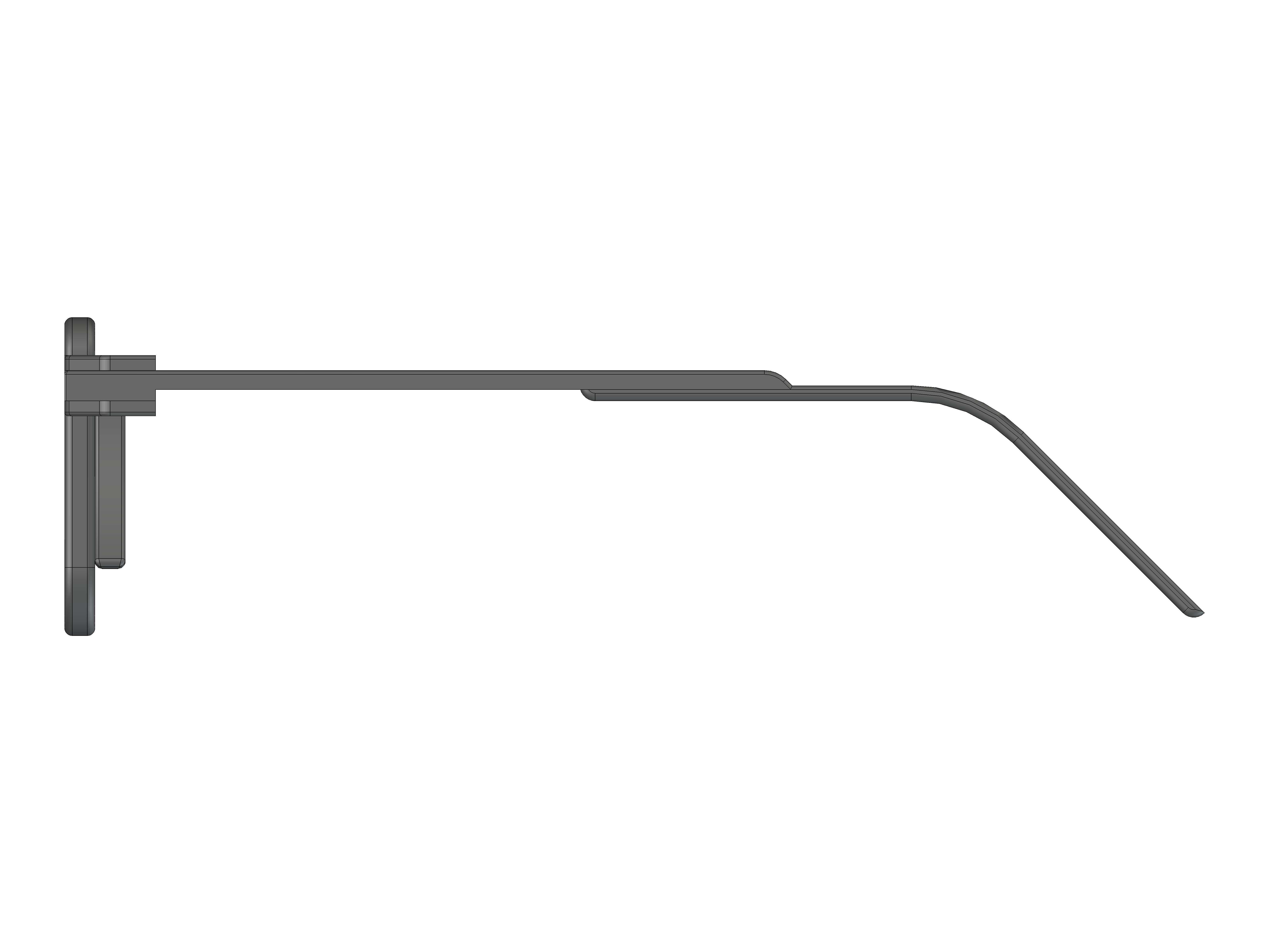
top
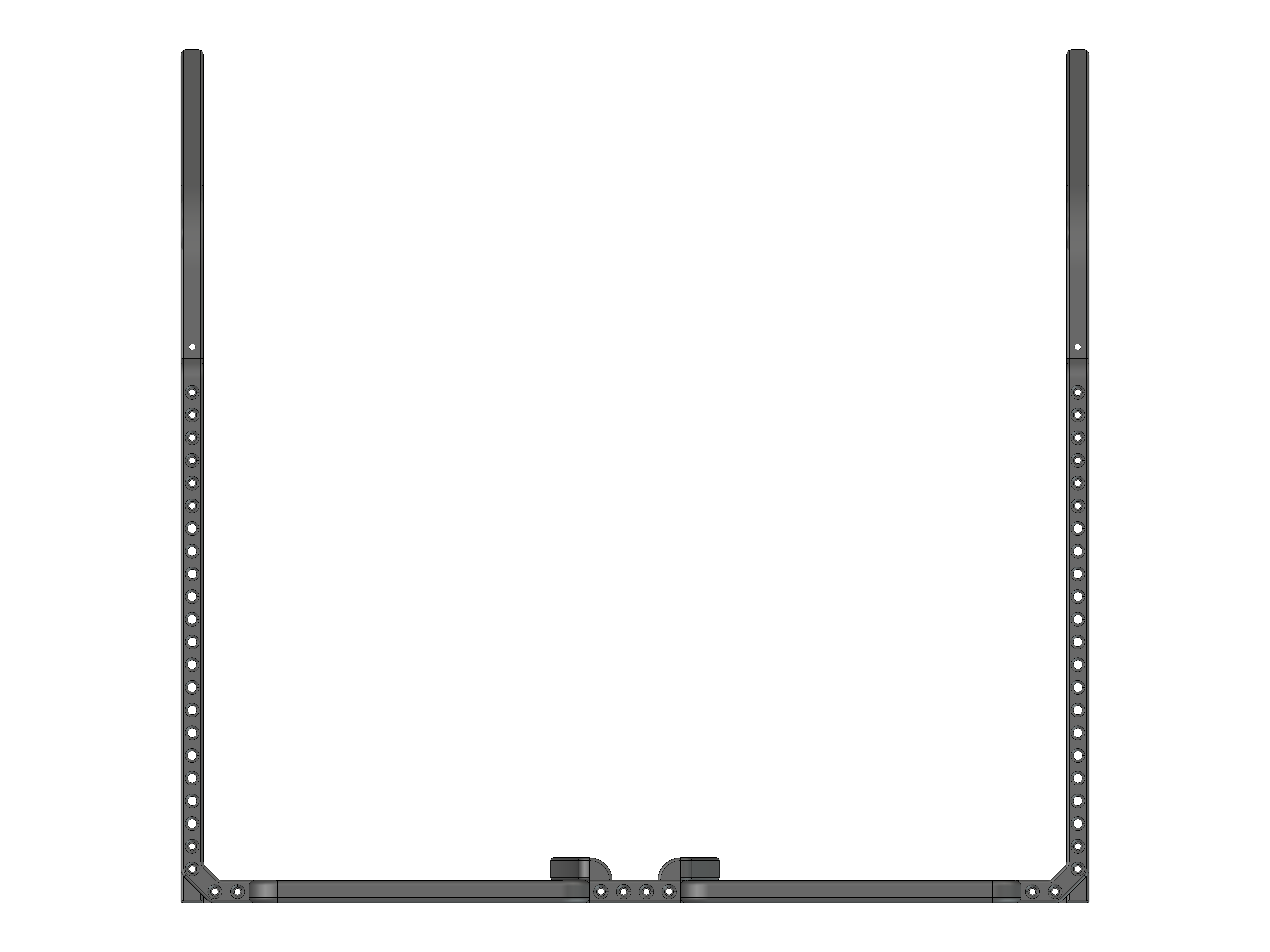
bottom
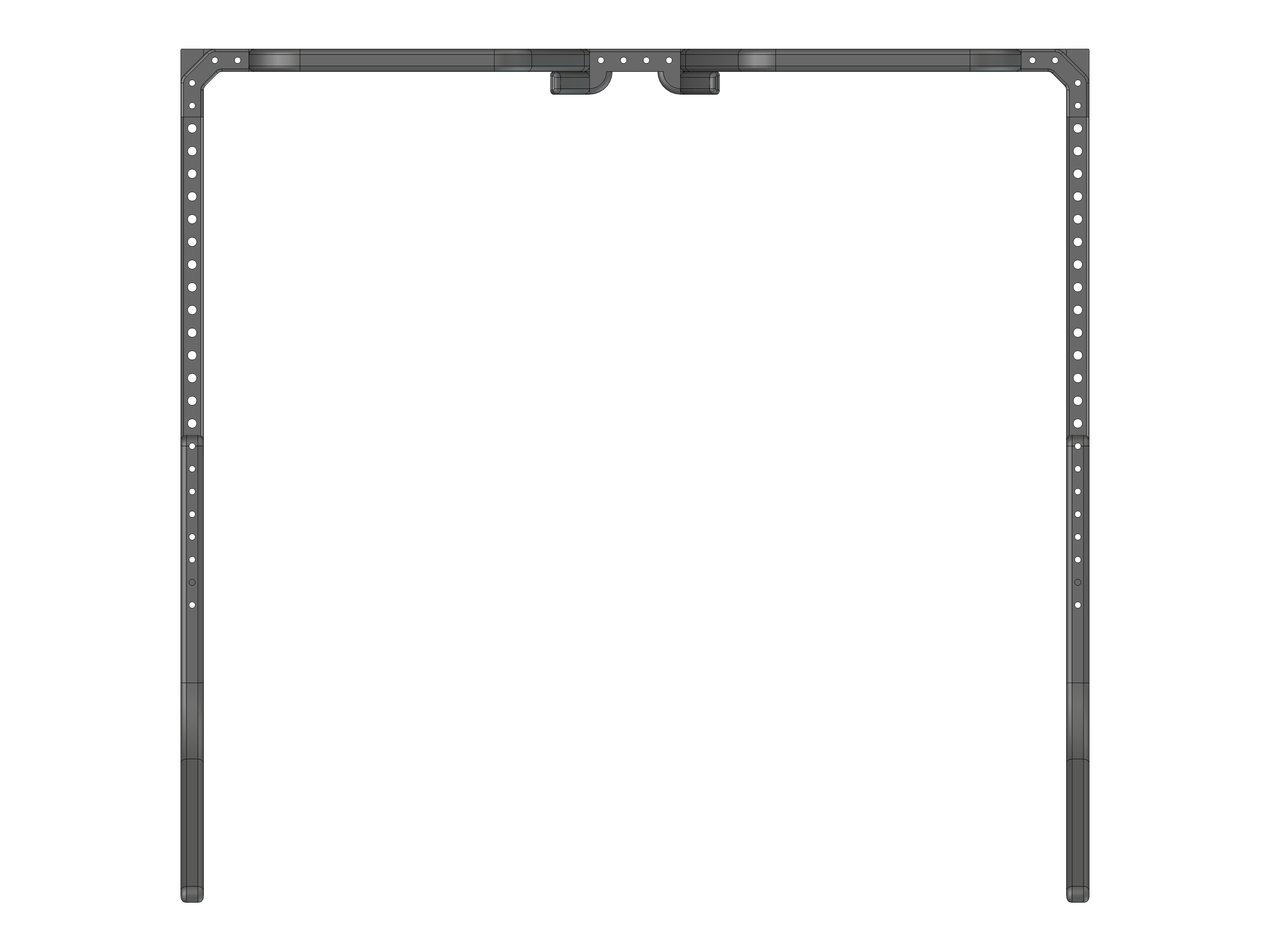
isometric
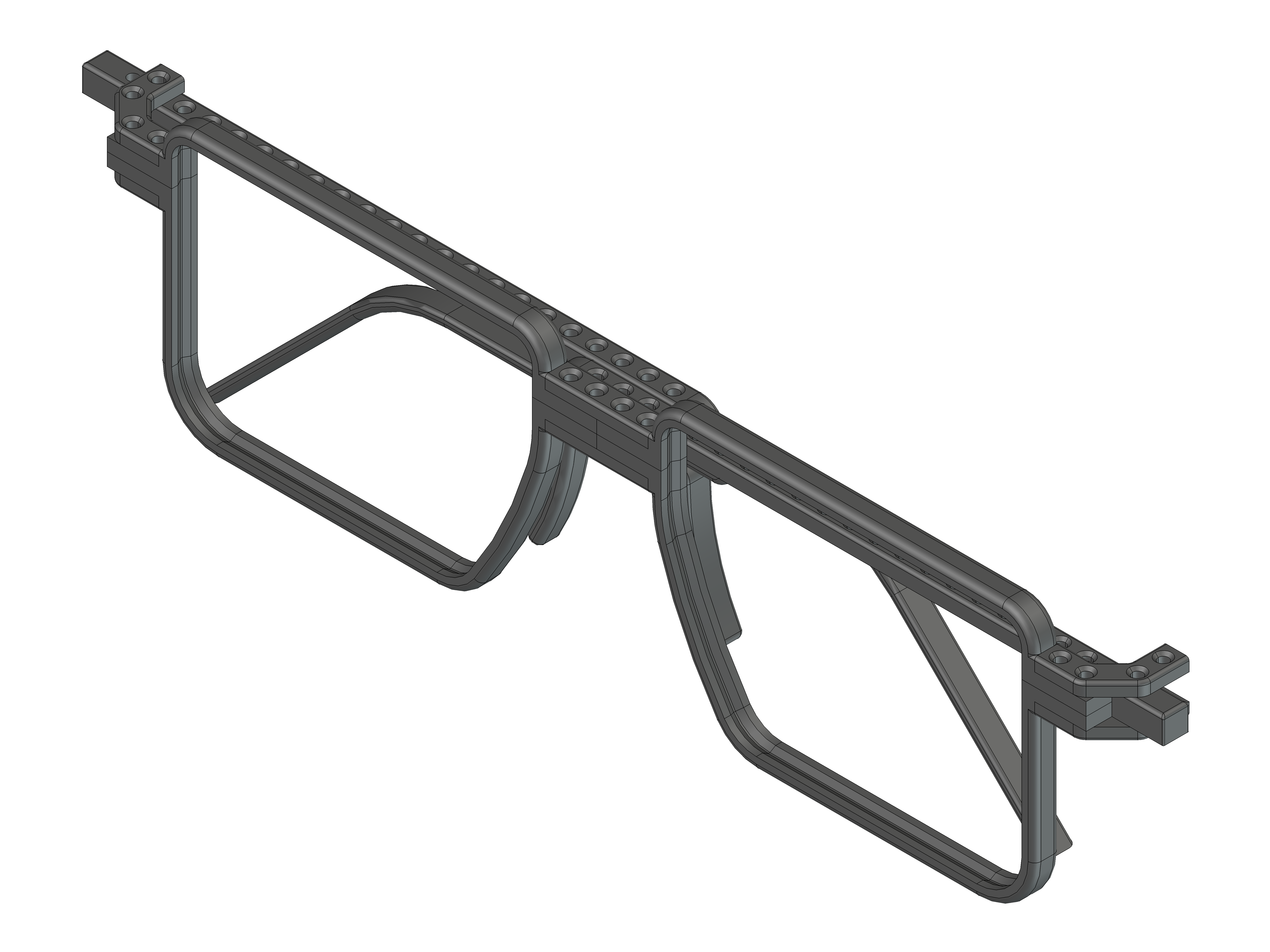
front
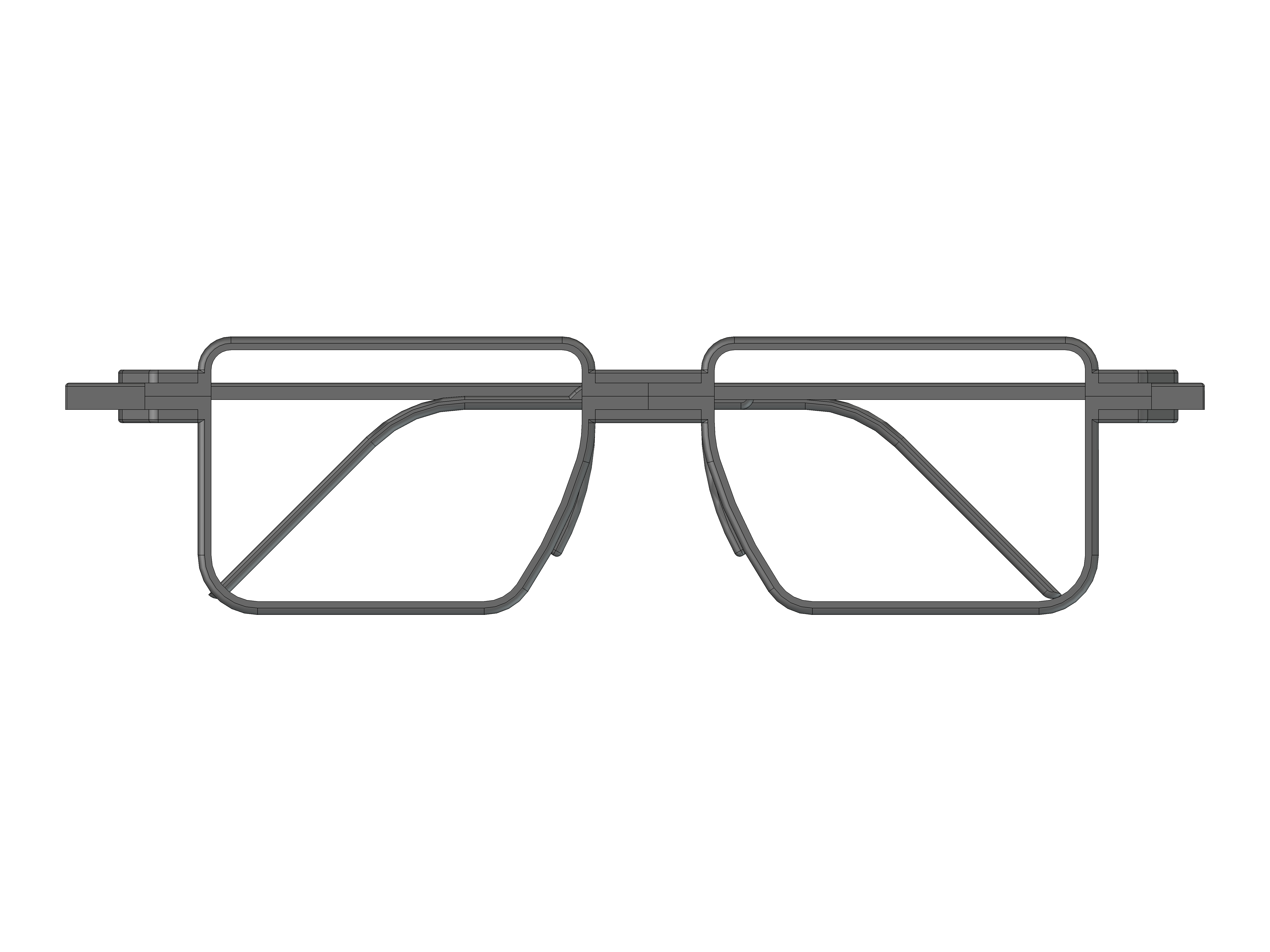
back
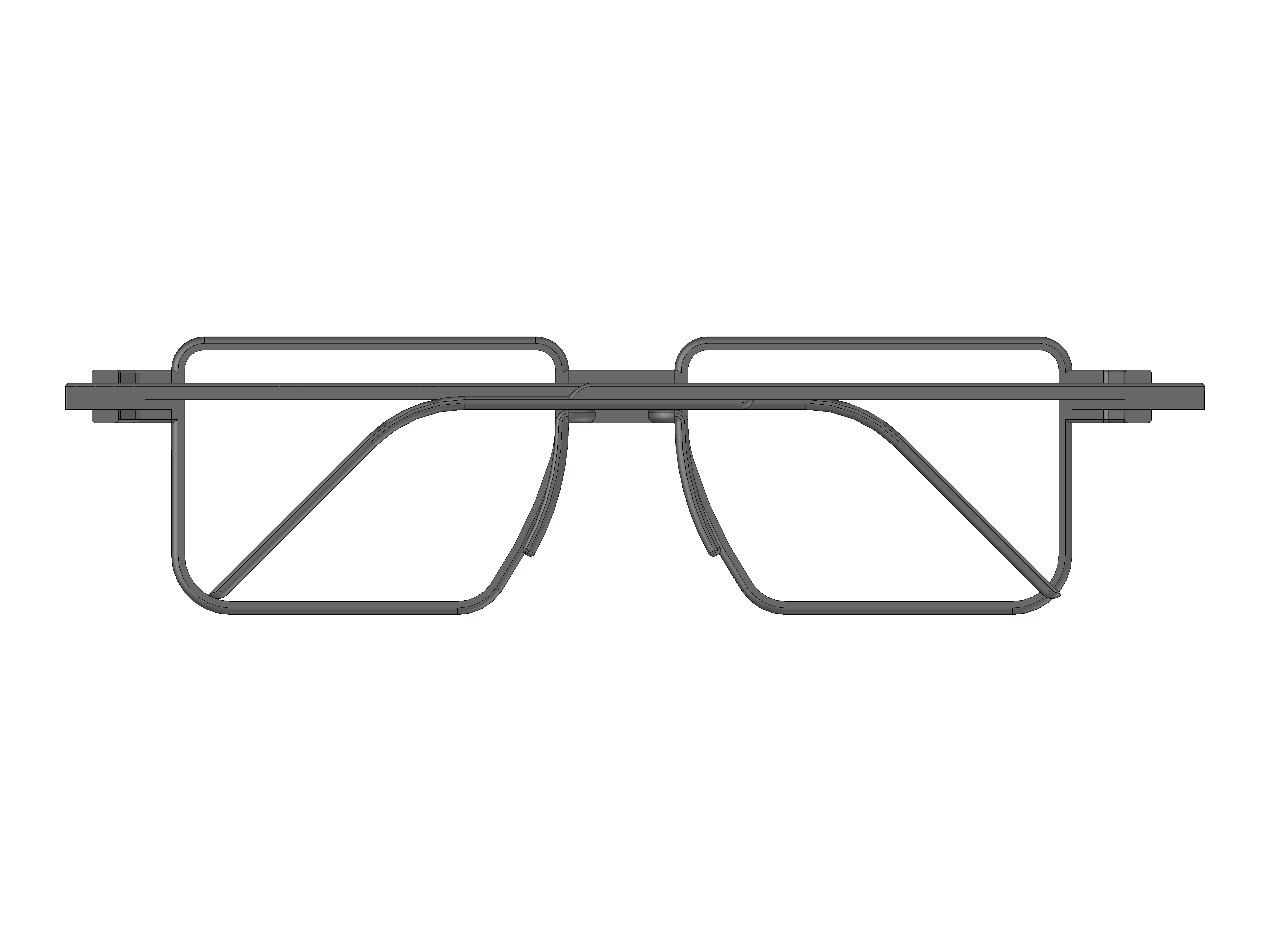
left
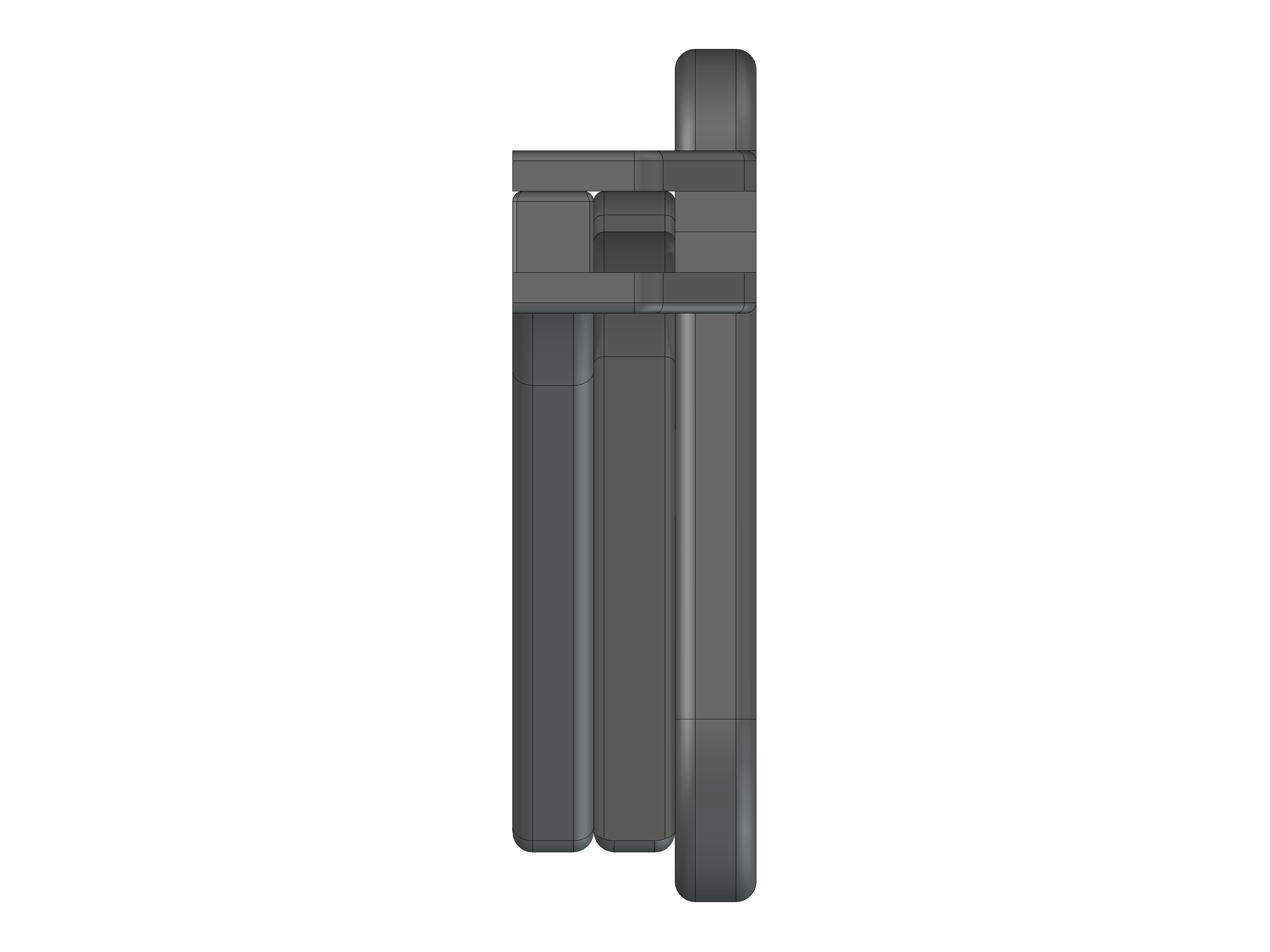
right
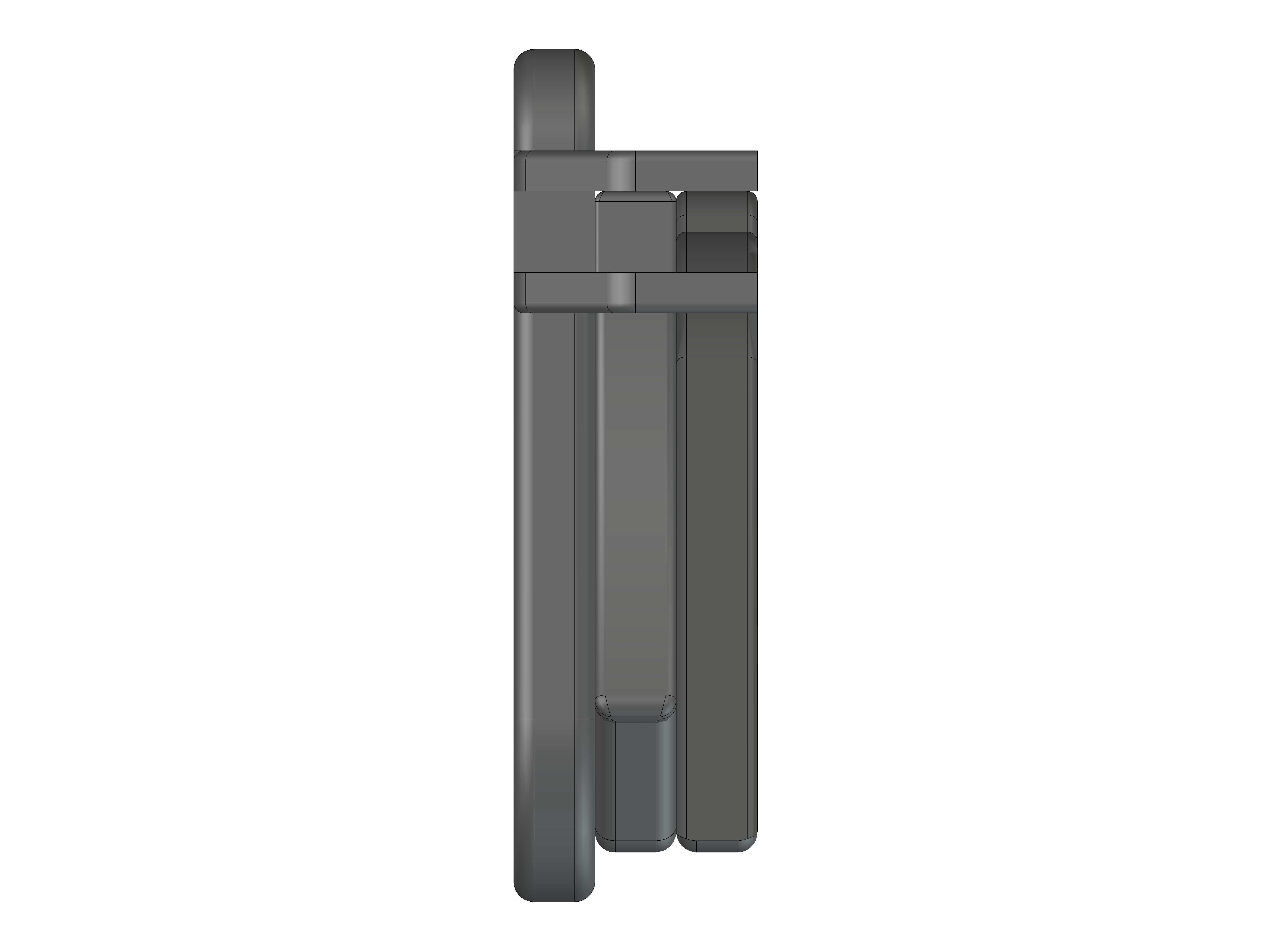
top
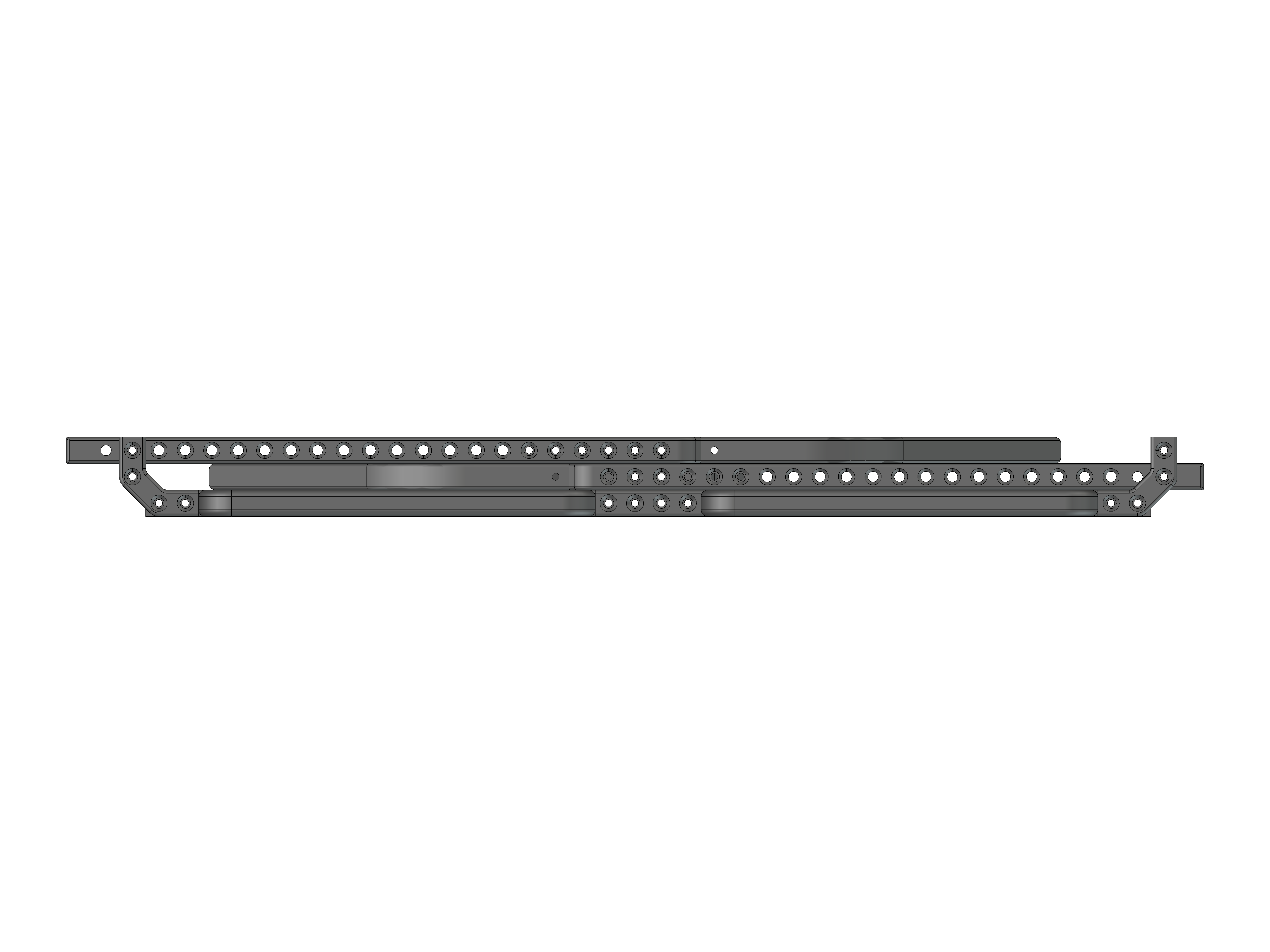
bottom
Loading feedback…